
Ranthambore Safari Guide
Ranthambore Safari Guide
Explore Ranthambore National Park through an exciting jungle safari and discover its diverse wildlife, scenic landscapes, lakes, forests, and historic surroundings. Ranthambore offers two main safari vehicles—Gypsy and Canter—and the park is divided into ten designated safari zones. Each safari follows an allotted route and zone, giving visitors a different experience of the reserve.
Ranthambore Safari Vehicles
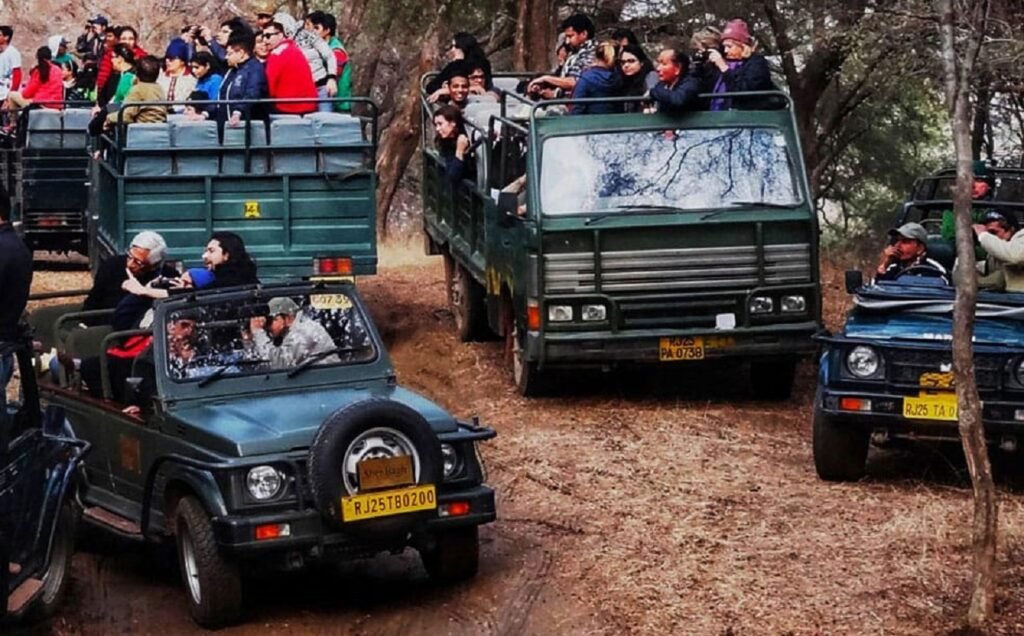
Ranthambore National Park offers two main types of safari vehicles: the Gypsy Safari and the Canter Safari. Both provide an opportunity to explore the park with a driver and forest guide, but they differ in vehicle size, seating capacity, and overall safari experience. A Gypsy is an open 4×4 vehicle suitable for smaller groups, while a Canter is a larger open safari vehicle designed for shared group travel.
Gypsy Safari
The Ranthambore Gypsy Safari is an open-top 4×4 safari vehicle with a capacity of up to six people, including the driver and guide. Its smaller size makes it well suited to navigating the park’s safari tracks and provides an open view of the surrounding forest. Gypsy safaris are available across the designated safari zones, subject to Forest Department allocation and availability. They are particularly popular with wildlife photographers, couples, families, and travellers looking for a more intimate safari experience.
Canter Safari
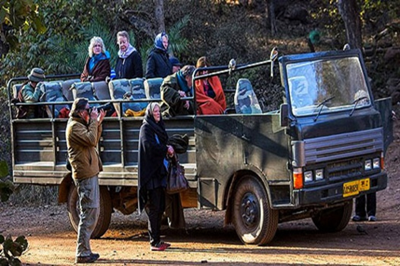
The Ranthambore Canter Safari is an open safari bus with seating for around 20 visitors. It is a shared safari experience and can be a practical choice for families, groups, and travellers looking for a larger group safari. Canters operate in designated zones, with current guidance indicating that Zones 1–6, 9 and 10 can be accessed by Canter, while Zones 7 and 8 are generally Gypsy-only. Vehicle access can change according to Forest Department rules and the date of travel.
Gypsy vs Canter Safari
| Feature | Gypsy Safari | Canter Safari |
|---|---|---|
| Vehicle Type | Open 4×4 Gypsy | Open Safari Canter |
| Capacity | Up to 6 visitors | Up to 20 visitors |
| Safari Experience | Smaller and more intimate | Shared group experience |
| Best Suited For | Families, couples & photographers | Families, groups & budget-conscious travellers |
| Vehicle Size | Smaller and more flexible | Larger group vehicle |
| Safari Zones | Generally available across designated zones | Operates in designated zones |
| Privacy | More private | Shared with other visitors |
| Photography | Good choice for wildlife photography | Suitable for general wildlife viewing |
| Group Size | Small group | Larger group |
Ranthambore Safari Zones
Ranthambore is divided into 10 safari zones, each offering different landscapes, habitats, water bodies, and wildlife experiences. Zones 1–5 are commonly described as the core safari area, while Zones 6–10 cover buffer and peripheral areas. The Forest Department determines the final zone allocation, and visitors should not assume that a particular zone guarantees a tiger sighting.
| Safari Zone | Key Areas / Landscape | What You May Experience |
|---|---|---|
| Zone 1 | Tuti Ka Nalla, Sultanpur | Forest landscapes, water sources and opportunities to observe a variety of wildlife and birds. |
| Zone 2 | Jogi Mahal, Nal Ghati | Varied forest terrain, water bodies and historic surroundings. A popular area for wildlife exploration. |
| Zone 3 | Padam Talao, Raj Bagh, Ranthambore Fort | One of the most scenic areas, combining lakes, grasslands, historic ruins and forest habitat. |
| Zone 4 | Malik Talao, Lakkarda | Mixed forest and open landscapes with water bodies that attract wildlife and birds. |
| Zone 5 | Kachida Valley | Rocky terrain, valleys and forest surroundings offering a different perspective of Ranthambore. |
| Zone 6 | Kundal | Open landscapes, grasslands and forest habitats with opportunities for wildlife and bird sightings. |
| Zone 7 | Chidikho | Hilly and rugged terrain with forest tracks and a relatively quieter safari environment. |
| Zone 8 | Balas | Rocky landscapes and forest surroundings offering opportunities to explore a quieter part of the reserve. |
| Zone 9 | Kuwal Ji, Chakal River area | Remote forest landscapes with varied habitats and opportunities for wildlife and birdwatching. |
| Zone 10 | Aantri | Hills, open areas, forest and water bodies providing a diverse landscape for wildlife exploration. |
Note: Safari zones are allocated according to the Forest Department's rules and availability. Wildlife sightings are not guaranteed, as animals move freely through their natural habitat.
Ranthambore Safari Shift
Ranthambore generally operates safari drives in two shifts—morning and afternoon/evening. Safari timings change throughout the season according to sunrise and sunset. Rajasthan Tourism states that the park is generally open from October through June.
Morning Safari
The morning safari takes place during the cooler part of the day and provides an opportunity to explore the forest as it becomes active after sunrise. Visitors may encounter deer, birds, monkeys, reptiles, and, with luck, larger predators.
Afternoon Safari
The afternoon safari begins later in the day and continues toward sunset. The changing light creates a different atmosphere in the forest, while animals may become more active as temperatures begin to fall.
Ranthambore Safari Timing
As Safari timings change throughout the season according to sunrise and sunset. A commonly published seasonal schedule is:
| Safari Period | Morning Safari | Afternoon Safari |
|---|---|---|
| 1 Oct – 31 Oct | 6:30 AM – 10:00 AM | 2:30 PM – 6:00 PM |
| 1 Nov – 31 Jan | 7:00 AM – 10:30 AM | 2:00 PM – 5:30 PM |
| 1 Feb – 31 Mar | 6:30 AM – 10:00 AM | 2:30 PM – 6:00 PM |
| 1 Apr – 15 May | 6:00 AM – 9:30 AM | 3:00 PM – 6:30 PM |
| 16 May – 30 Jun | 6:00 AM – 9:30 AM | 3:30 PM – 7:00 PM |
How to Reach Ranthambore
Ranthambore is located near Sawai Madhopur in Rajasthan and is well connected by rail and road. The national park is approximately 14 km from Sawai Madhopur, making the town the main gateway for visitors travelling to Ranthambore.
By Train
Sawai Madhopur Railway Station is the most convenient railway station for travellers visiting Ranthambore. Regular trains connect Sawai Madhopur with major cities including Jaipur, Delhi, Mumbai, Kota and other parts of India. From the railway station, visitors can take a taxi, auto-rickshaw or local transport to their hotel and safari area.
By Road
Ranthambore can be reached by road from Jaipur, Delhi, Kota and other major cities. Visitors can travel by private car, taxi, bus or other road transport to Sawai Madhopur and then continue toward their accommodation near the national park. Rajasthan Tourism also lists local buses, taxis and cabs as options for reaching Ranthambore.
By Air
The nearest major airport is Jaipur International Airport, approximately 150–175 km from Sawai Madhopur, depending on the route and exact destination. From Jaipur, visitors can continue to Ranthambore by road or train.
Jaipur to Ranthambore
Ranthambore is a popular addition to Rajasthan itineraries from Jaipur. Rajasthan Tourism lists the Jaipur–Ranthambore road journey at approximately 180 km and around 3 hours, depending on traffic and route conditions.